

cooking lessons
on learning to cook with meal kits

A note: I think it’s outside of the Larry David window to say Happy New Year, but I will anyway. I am restructuring the newsletter a bit, in that each month, there will be one personal essay (around food almost always), and one deep dive into a food anthropology theme. Thank you for being here!

At seventeen, I dated a boy that insisted I wear a hockey helmet while helping him make pasta sauce from scratch. It was a joke of course, a nod to my clumsiness, or my nervousness, or both. I was gangly and well-read, but a disaster in the kitchen. On our date, I tripped down the porch steps leading out to his mother’s vegetable garden, where the ripe tomatoes glimmered in the bushes. It was all strange to me: I knew nothing about pasta sauce that wasn’t born from a jar, and thought gardens were only for hydrangeas.
The theory of my cooking ineptitudes persisted, following me through new boys and their precious kitchens. More claims evolved around me being too messy, too foolish, or too unsophisticated to be cooking alongside them. The scoffing laughs of a French man who couldn’t fathom that I didn’t know what fresh rosemary looked like. The heavy sighs of a man whose band pretended they lived in the 80s when I didn’t know how to pronounce crudité (I learned: not crud-ight). The bellows of frustration when I couldn’t get the timing right for hollandaise sauce by an angsty metal head, who slammed cupboards and suggested I just clean up the garbage scraps. In each occurrence, I was banished.
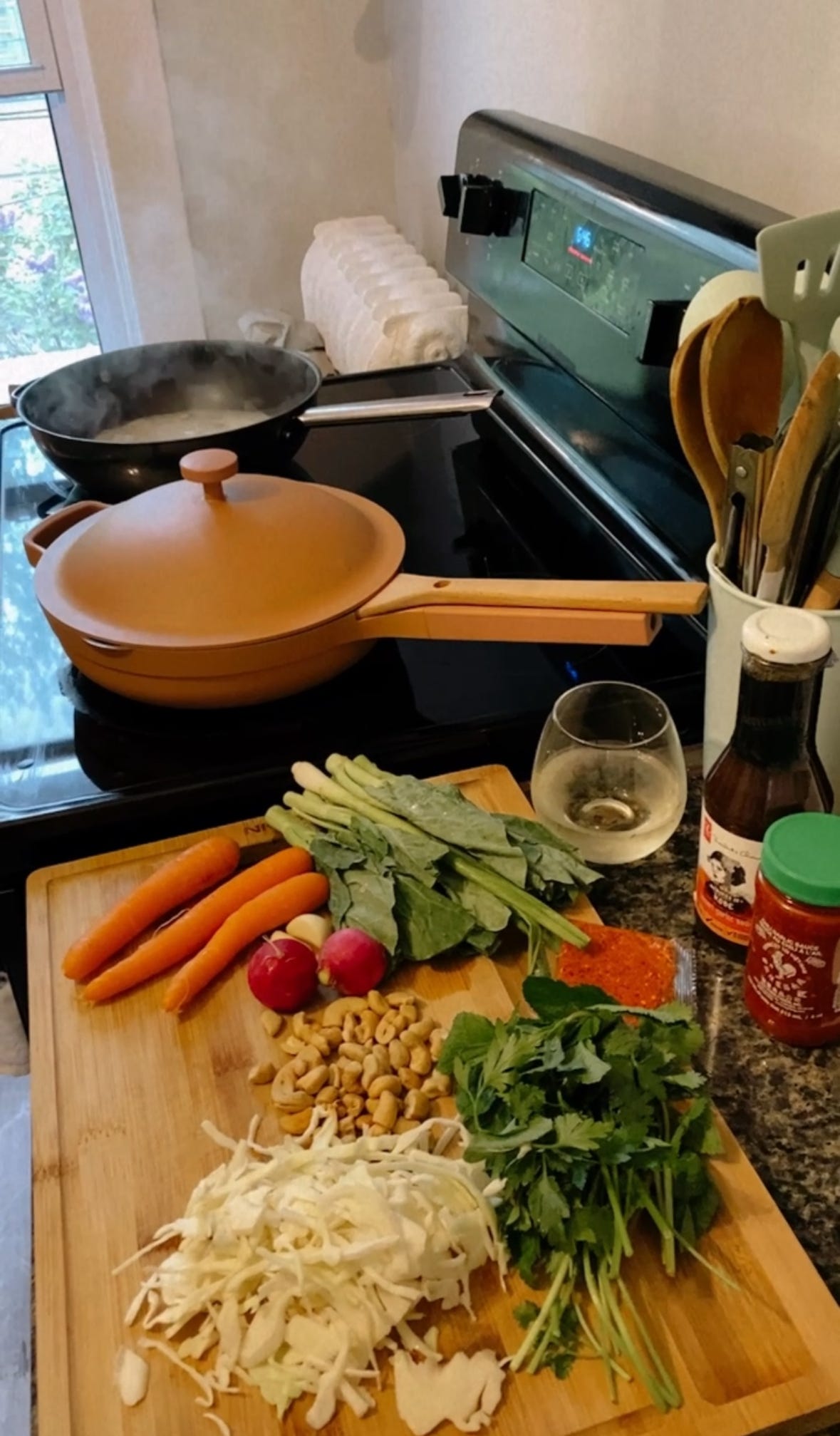
For a while, I believed them. I joined in, joking about how hopeless I was with a spatula. My less chic spin on Carrie Bradshaw, swapping the shoes in my city oven for loser boyfriends and their Matty Matheson recipes. It was Toronto in the 2010s: alongside the charcoal ice cream-obsessed foodies of King Street was the firm hold of Toronto-Mans-Chef-Bro fantasy industry west of Spadina, certain they could out-do Matty’s Munchies recipes.
I had never really learned how to cook, apart from some basics I picked up from my high school friend, Ellen, and her lifelong vegetarian mother, Barb: dicing vegetables, mixing dressings from oils and herbs, cooking orzo, crumbling feta, then plopping my creation together in a bowl without much fanfare. Barb saw me like a stray puppy about to be set loose in the adult world with no culinary skills to rely on. She typed out simple, edible recipes in a word doc, printed them out, and slapped them in front of me on the counter.
I bound the pages in a green binder, writing small notes when I’d hear tidbits from her on Skype calls after Ellen and I moved out of town for university. This “cookbook” became the extent of my knowledge, a baseline of minimalist vegetarian bowls. The boys and men in my life hated how unseasoned it was.

When I moved to Toronto at 23, I landed a job working as a host at a vegan restaurant and juice bar. I had eaten there a few times before, recognizing indie musicians and artists that served there in quiet fascination. To work there was a dream, it had a flexible time off and holiday approach to accommodate tours and shows. I didn’t know if I wanted to be a writer outside of academia yet, but I knew I wanted to meet creative people and share a bowl of sweet potato fries while laughing about strange encounters at the end of our shifts. The restaurant supported my baseline dietary knowledge and felt bountiful as a young mother in an expansive city. I could take my comped meals home and split it with my toddler, stretching the brown basmati rice, roasted red peppers, zucchinis, and crispy tofu for days if we needed to (so long as I remembered to keep the dressing to the side).
For the next five years, I worked steadily in hospitality. Take out boxes soothed my need to cook much at all. Between the foundational green binder and the work freebies, I felt like I had more than enough to lean on for fueling myself and my daughter. It was fuel, to be sure: I was poor, food insecure, and focused on just making sure we had as many nutrients as we could. It was futile to bother trying in a kitchen I wasn’t ever welcome in.
As COVID hit, I was single parenting, and avoiding germ exposures for my daughter in grocery stores became top priority. My part-time jobs with their free foods in cardboard containers had mostly dried up, and I had moved to an apartment with my daughter in my small hometown. For the first time, I was faced with the challenge of really being in my own singular kitchen. I had a handful of dishes I was comfortable making for us: an avocado-tomato-cumin-mustard salad, a smoky white bean take on a sloppy joe, a miso mushroom pasta, a Greek salad recipe (with a dressing shared from George at The Favourite Greek years prior), and a repertoire of smoothies I picked up from the Toronto restaurant (date almond, swoosh, a green one with celery my friends hate, and a hot “deep immune” for when we were sick). It was a small rotation, and I knew I needed more.
During weekly grocery shops, I developed a bad habit of aspirational produce purchasing. Having seen beautiful meals on vegetarian blogs or Instagram photos, I would gather items as they came to view, hoping I could reproduce a fraction of an idea. Yet I’d get too busy during long days of “tablet school” (online learning), teaching, picky-eating dinners for my daughter, and hours of late-night dissertation writing. I’d wind up calling Hanoi House for their garlic shrimp noodles at 9pm.
On a trip back into Toronto to pick up my daughter after she visited her dad, I saw a meal kit box thrown haphazardly against his neighbour’s door. It seemed like a good compromise between takeout and cooking, where food was still getting delivered but I had to cook most of it myself. I rotated through various companies and their discounts to save money where I could. Chef’s Plate was too salty, Hello Fresh was too plain, but Good Food had the right ratio of cooking time and space for improvisations and flavour.
Meal kits get a lot of slack in the food circles I orbit, and I appreciate why. But when you grow up with Shake N Bake chicken and no learnt affinities for cooking, food knowledge forms are incredibly daunting. The voices in my head persist around not being enough in the kitchen, not being sophisticated, not having the proper tools, not knowing efficient techniques.
Meal kits were a great entry point for me to finally learn more, on my own terms. I was safe from the mercurial reactions of men around heated pans and knives to explore new ways of preparing and cooking and thinking about foods. I learned to value establishing a mise en place, even if my Peterborough Squirrel House didn’t feel deserving of such a beautiful phrase. I began to understand the strategic approach needed in a grocery shop, seeing the portions laid out for each selected meal and knowing it almost always made enough for 2 dinner plates and some lunch leftovers.
Cooking regularly was a quiet, structured miracle in the scribbles of my twenties. I knew when my meals would get delivered, I had control over what dishes I chose. I avoided heavy creams and butters due to my lactose intolerance, a dietary experience once dismissed as foolish by the masculine chefs of my past. Yet here were vegetarian and fish-based dishes I could make on my own, and plate in a way that looked nice enough to make my four-year-old smile, and my stomach wouldn’t be distressed. The lessons were straightforward, the produce was fresh, and the organizing allowed for minimal clean-up, all precious time savers for a single mother.
Meal kits were a container to the future, where lessons and tricks were bestowed to me through sans serif typeface rather than maternal domesticity. I inspected each specialized spice blend and recipe list, internalizing suggested ingredient ratios and flavour pairings with heartfelt curiosity. There was practicality, but there was also newfound joy in learning that I could add white wine to a stew to round the flavour, or blister a lemon to add more dimension and fun to a shrimp pasta dish. I knew I wouldn’t need these always, but they helped me understand how to add stability, planning, and focus to the domestic parts of my day.
When I started dating my now-husband during COVID, we cooked together. Dates were making shrimp curries or searing rainbow trout in his kitchen while listening to D’Angelo albums. I had my own built confidence, now, and cooking was a respite from the busy and uncertain world around us. But as we later adapted to living together, I stopped the meal kits and went back to optimistic dream-shopping. I struggled to balance my vegetarian and his meat-heavy dietary preferences on a shopping list. I was enamoured once again by recipes on social media thrown together in quick bursts on my small screen. We loved cooking together, but the food purchased in moments of optimistic chaos was still wasted and wilting in our fridge.
After a short maternity leave in the summer of 2024, I returned to work and knew I needed a real strategy for once. The realities of feeding four necessitated smarter grocery habits as high food costs persisted. I wrote then of my hot slop era, trying out slow cooker recipes from a Martha Stewart cookbook I borrowed from the library. It worked (when I remembered to prep in the morning, at least), and soon, I was building up my new approach. It made sense, shifting from meal kit recipes toward cookbooks. While both offered a break from the Internet, cookbooks offer more autonomy.
It’s been a successful experiment. We now have a whiteboard on the fridge where meals of the week are set out on Sundays. We build our grocery lists off the meals we want to cook, recipes gleamed from the rotation of pantry or library cookbooks that month. We split dinner duties, usually 3 each plus takeout, and the similarities of recipe ingredients within cookbooks make it more likely that we use the whole cilantro bunch rather than half. It’s not a perfect system, but it’s greatly reduced the food waste for our household while staying on budget.
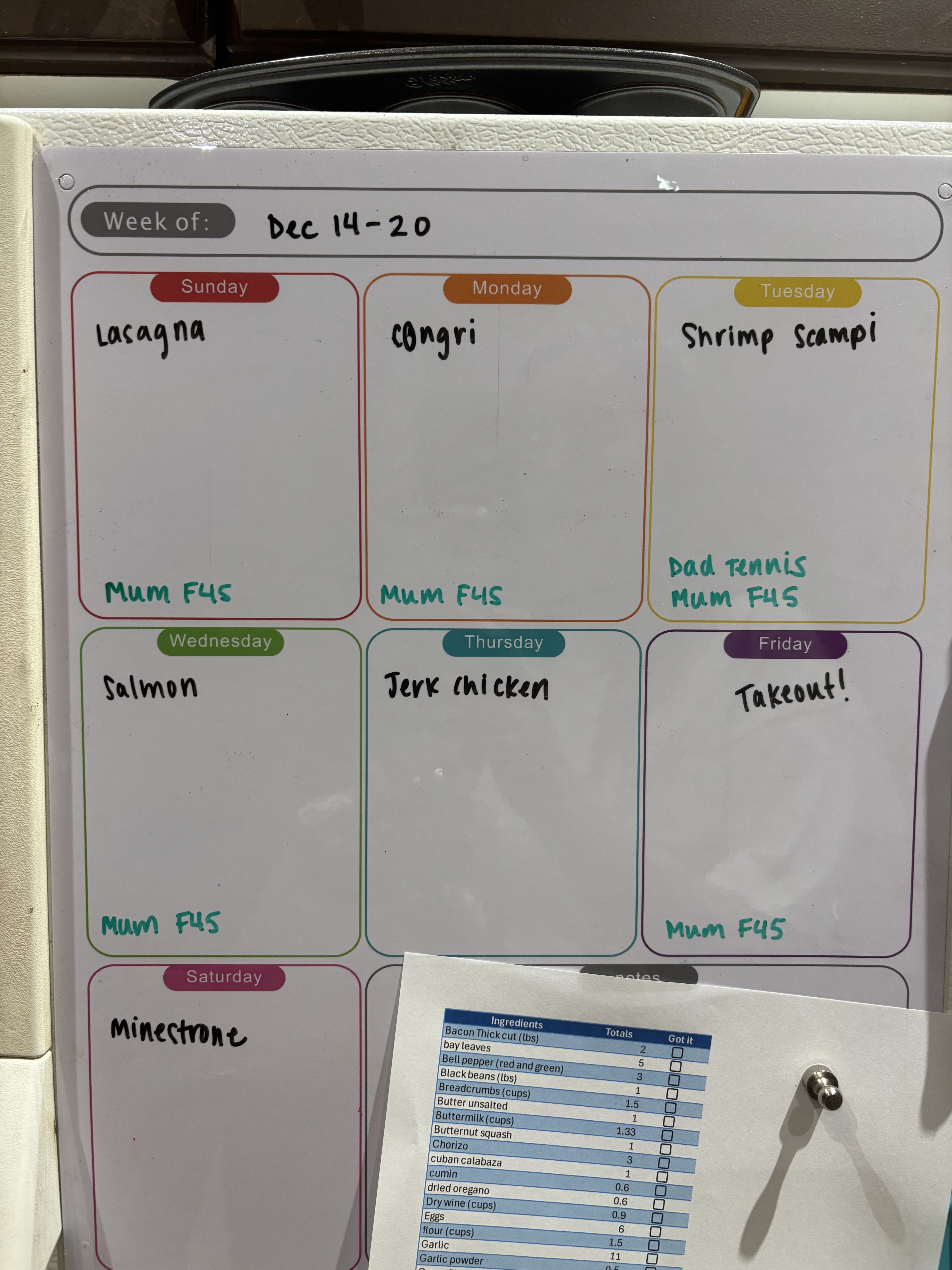
This past Sunday, I made a minestrone during the quiet afternoon hours that my son napped and my daughter played Pikman. My sister-in-law was in town and brought wrinkled cherry tomatoes, which I covered in salt and pesto and let sit as the minestrone cooked. I folded the mixture in at the end, happy to have used them up and made enough for all of us (with enough leftovers for at least two lunches).
After struggling with food insecurity, I always seek comfort in the ability to have enough left over to span a couple of lunches. But with that, there’s also a strategic peace blooming between me and the kitchen. Through meal kits and cookbooks, I have taken back a space I was told to leave too many times. I’m not interested in being a perfect cook, but I am happy to continue learning. Where I used to hesitate, now I launch into a rhythm and comfort concocting hearty dishes—finally well-seasoned, with more than enough to share with the people that I love.
Thanks for reading!
News!
AnthroDish Podcast is back for the second half of season 10! Check out the most recent episodes on my YouTube channel if you like video, or on Apple Podcasts, Spotify, or my podcast website. I’m really excited about this season, it’s been some of my all-time favourite conversations and directions.
New piece in chlorophyll literary magazine, on reconnecting to my lost Irish language in the diaspora, which you can read as part of its second issue here.
Feminist Food Friends hosted its holiday mingler and recipe swap in December. We plan bimonthly events and workshops online, which is free for my paid subscribers, and starts at $3 USD for everyone else. Stay tuned, and catch up at on the idea here.
so much here to love…
meal kits — I signed up for Purple Carrot a few years back, pre-Covid days, bc well, Mark Bittman and international vegan meals - I loved it, M was less enamoured (being an omnivore) but still stuck with me (it meant just 3 vegan meals per week) and we ended up keeping a file of the meal kit recipes (they included a cardboard hard copy with each kit) and marking our 1-5 rating on them, which helped a lot when ordering the next set bc we could try to request only the 4 and 5 star meals) and the international nature of the meals was a lot of fun (and I learned a lot too)
your description of the attractiveness of meal kits is very spot on - we stayed with Purple Carrot for about 14 months, but finally found our moving every 4-6 months to switch from one home to the other became a big problem as our remote off grid home could only use a PO box for receiving packages and they could not ship to this, which meant frequently pausing our sub - but I have thought often about starting it again, and we still have those recipe cards!
organising week,y meal plans to shop more effectively and reduce food waste — I so wish we could do this properly/consistently, but so far we have failed - it requires committing to certain meals and alas that commitment has not been popular in our home - but I still aspire
and speaking of aspirational purchasing anything food, this I know super well! but have not been able to break the fever